

Nil cruise
Eternity Within Reach
Three days in Cairo, followed by a week-long cruise along the Nile from Luxor to Aswan. Embark on a journey into the heart of an Egypt as mythical as it is majestic.
Arriving in Cairo: A Whirlwind of Wonders and Towering Emotions
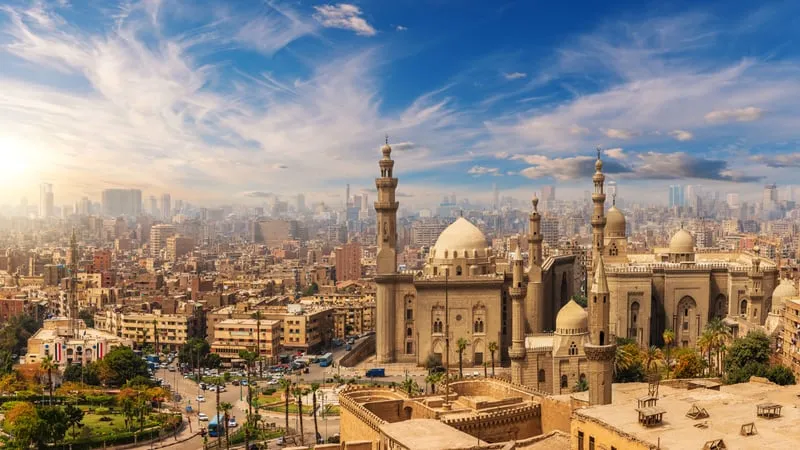
Nothing quite prepares you for your arrival in Cairo (Al-Qāhira, meaning ‘the victorious’ in Arabic). The city is bursting with life. Fuelled by its youthful population, it continues to expand amid an extraordinary cacophony, beneath an almost permanent haze of pollution. Both modern and medieval, Africa’s largest metropolitan area immediately draws you in with its frenetic energy. Its population is young, with an average age of under 25. Today, it is home to nearly 25.6 million people, almost ten times as many as in 1950, and welcomes around 500,000 additional residents every year.
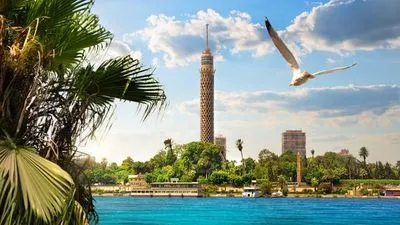
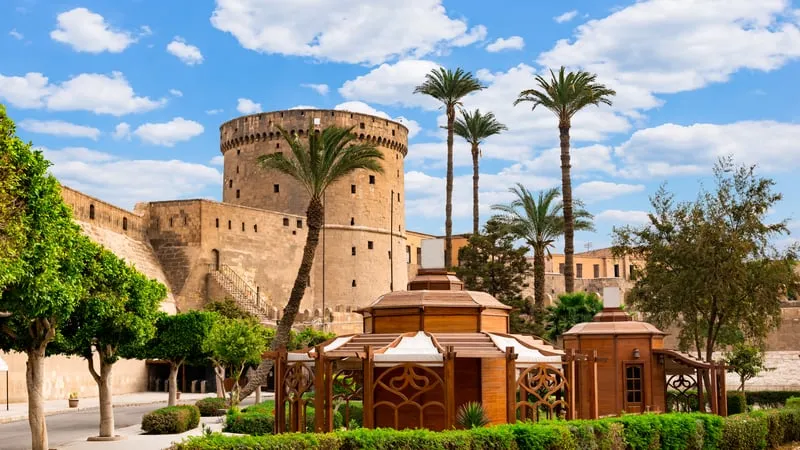
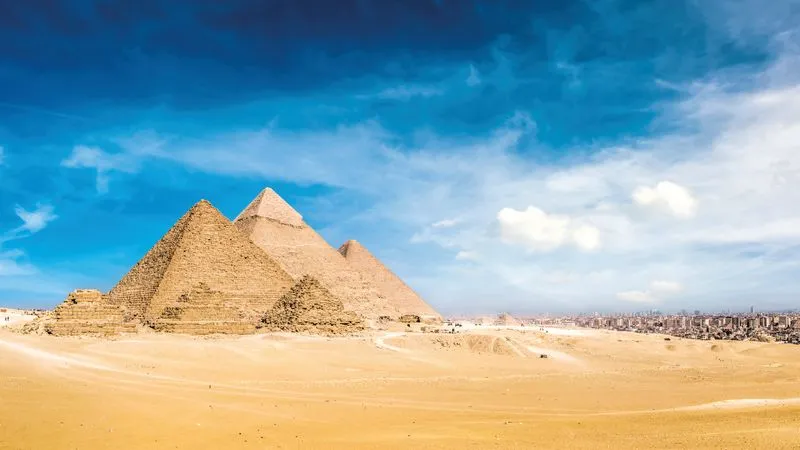
And so the city continues to spread. The panoramic view from the Citadel bears witness to its relentless expansion. Forget the desert landscape immortalised by Antoine-Jean Gros, depicting Napoleon rallying his troops before the Battle of the Pyramids against the Mamluks on 21 July 1798. Today, the pyramids of Khufu, Menkaure and Khafre are surrounded by residential buildings. The city has swallowed them up. Yet this takes nothing away from their beauty or their enduring mystery. Thousands of books have been written about them, and the most outlandish theories have been put forward. Some have even suggested that these monuments, conceived as vessels for the heavens, were built by extraterrestrials. Even today, the secrets of their construction remain an enigma.
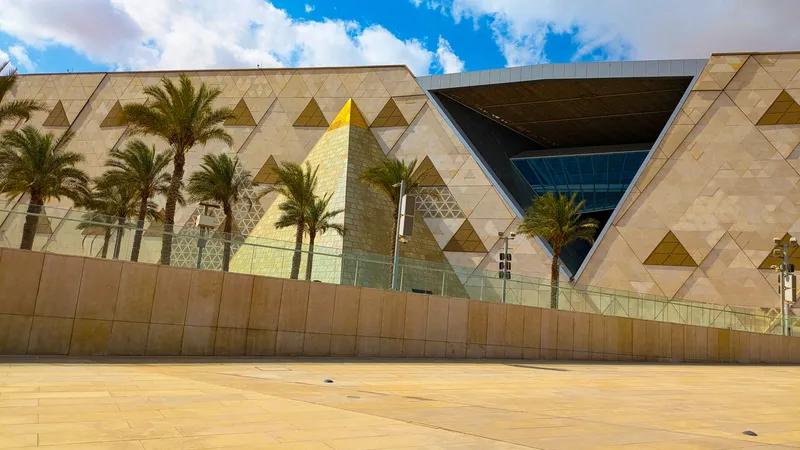
Standing on the Giza Plateau are the three great pyramids, including the last surviving Wonder of the Ancient World. Nearby is the new museum of antiquities: the Grand Egyptian Museum (GEM). Its opening was eagerly anticipated for years. Frequently announced and repeatedly postponed, the museum finally opened in full on 4 November 2025. The result is spectacular, a fitting tribute to a civilisation whose wonders have captivated our imagination for centuries.
It would be impossible to list them all. Spanning 7,000 years of history, the GEM houses a treasure trove of 100,000 artefacts. Highlights include the colossal statue of Ramesses II, Khufu’s solar boats and the complete collection of Tutankhamun’s treasures, with more than 5,000 objects brought together for the first time. Among them is his magnificent funerary mask, made from 10 kilograms of gold, which has become an enduring symbol of ancient Egyptian civilisation. How fickle history can be.
Among the many royal dynasties, which saw more than 200 pharaohs, including eleven named Ramesses and seven queens named Cleopatra, it is Tutankhamun whose name has endured. An otherwise unremarkable pharaoh, he died at the age of nineteen after reigning for just a decade. His fame rests entirely on the fact that his tomb was one of the few discovered almost intact, despite having been looted in antiquity. Its extraordinary treasures have survived to this day. Eternity, it seems, can hinge on the smallest of things.
Cairo: A Bustling Maze of Bazaars, Palaces, Minarets and Bell Towers
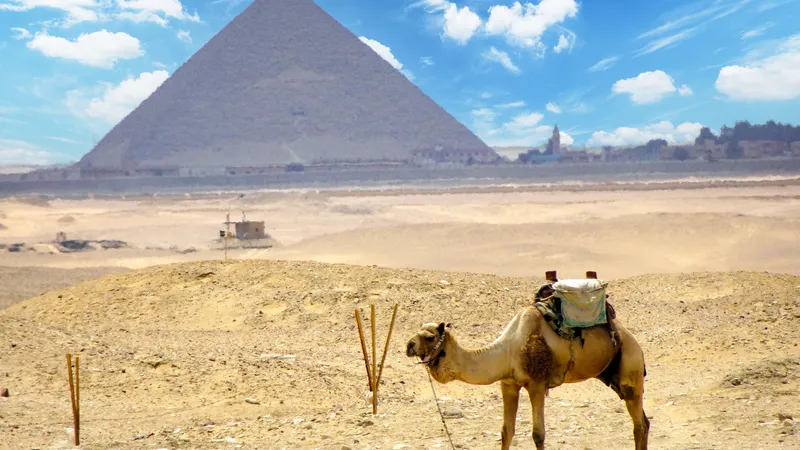
After exploring the Giza Plateau, we delve a little deeper into Egypt’s history over the following two days. Our first stop is Saqqara. More pyramids, but entirely different from those we saw yesterday.
Around twenty kilometres and just over a century separate the two sites. Yet Khufu’s pyramid, standing at 146.6 metres, towers almost 85 metres above Djoser’s 62-metre pyramid, making it nearly two and a half times as tall. Architectural styles had evolved. Gone were the stepped façades, replaced by smooth surfaces and clean geometric lines. Saqqara, a testing ground for eternity, paved the way for the masterpieces of Giza.
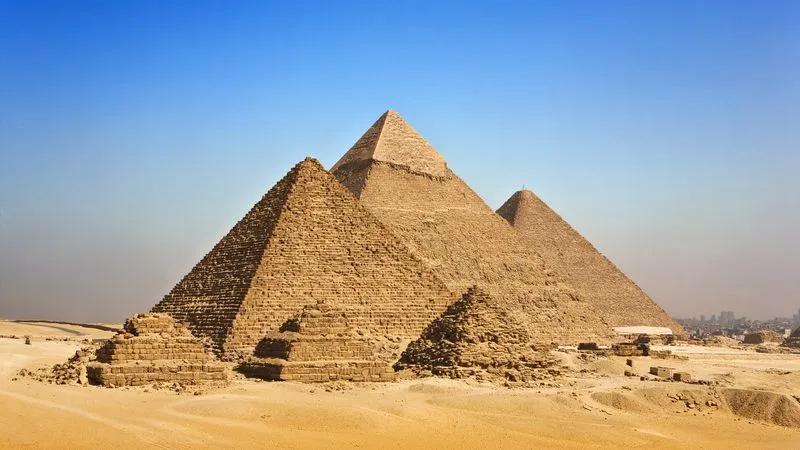
Pyramids of Giza
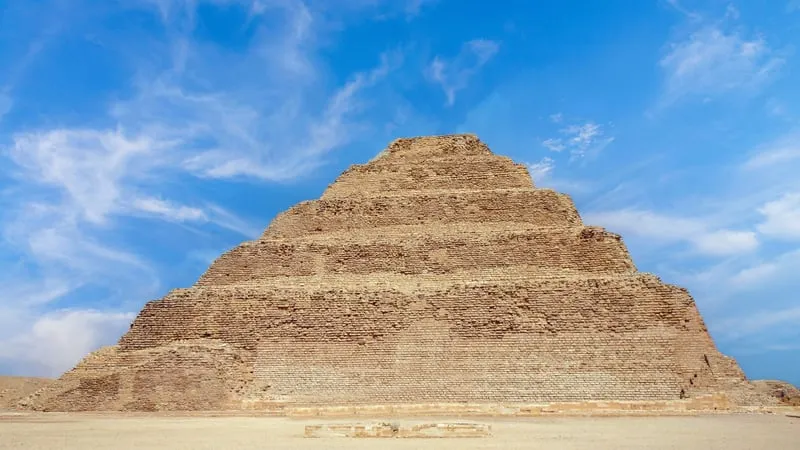
Tomb of Djoser
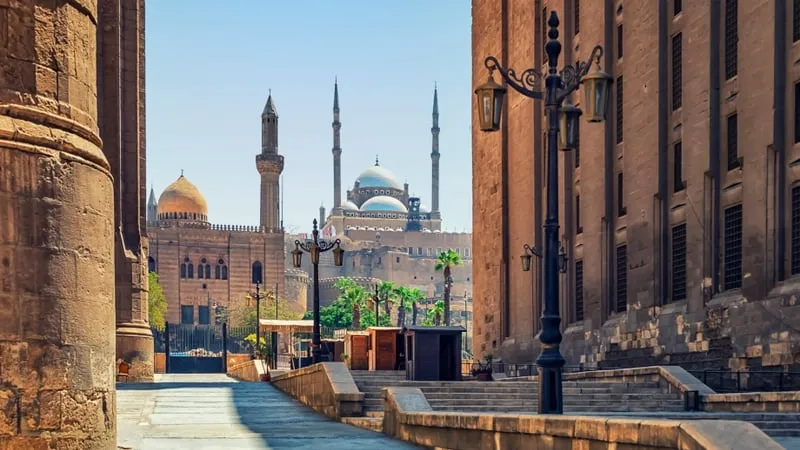
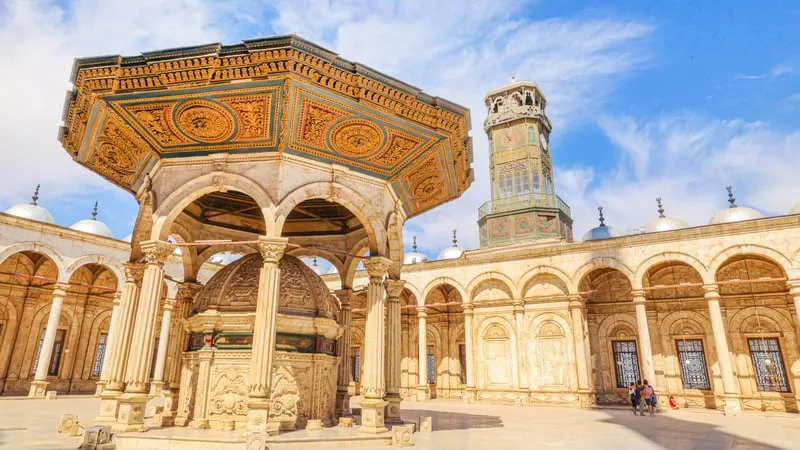
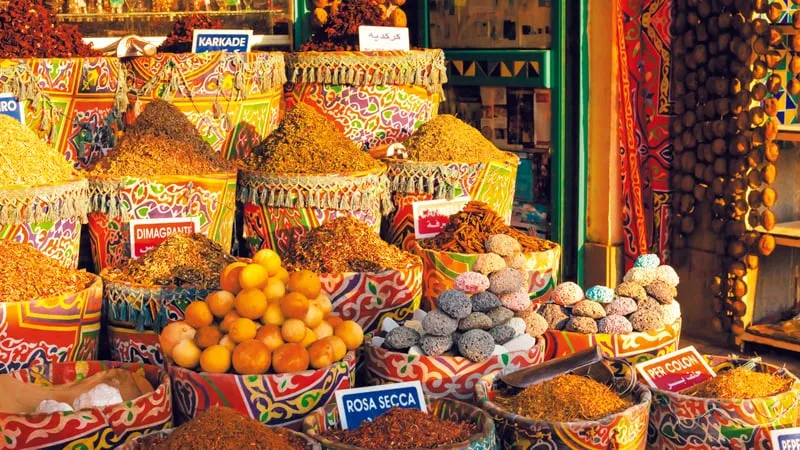
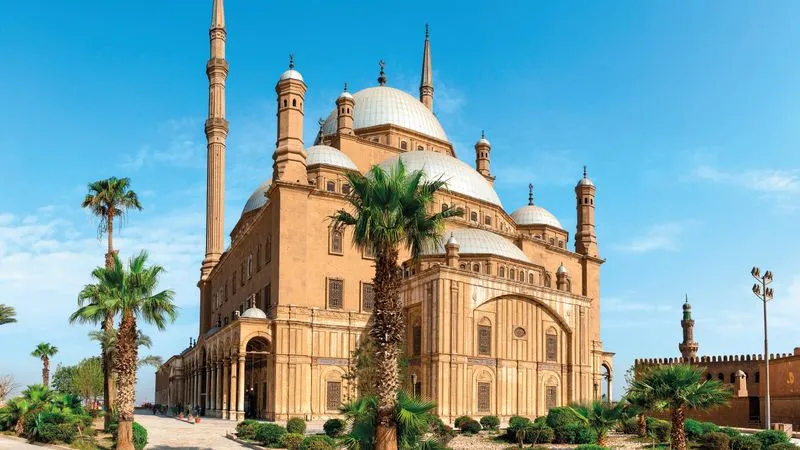
For the rest of our visit, we return to the heart of the city. Into the souk, where everything is open to negotiation, whether you are paying in euros, Egyptian pounds or even cigarettes. All it takes is a little patience. We make our way to the Citadel, home to no fewer than three mosques, including the Mosque of Muhammad Ali Pasha, as well as a palace. Named after Saladin, the fortress serves as a reminder that it was originally built to defend the city against the Crusaders.
We now enter the Coptic quarter, home to the descendants of Egypt’s earliest Christian communities.
Today, Copts are estimated to account for around 10% of Egypt’s population, or some ten million people.
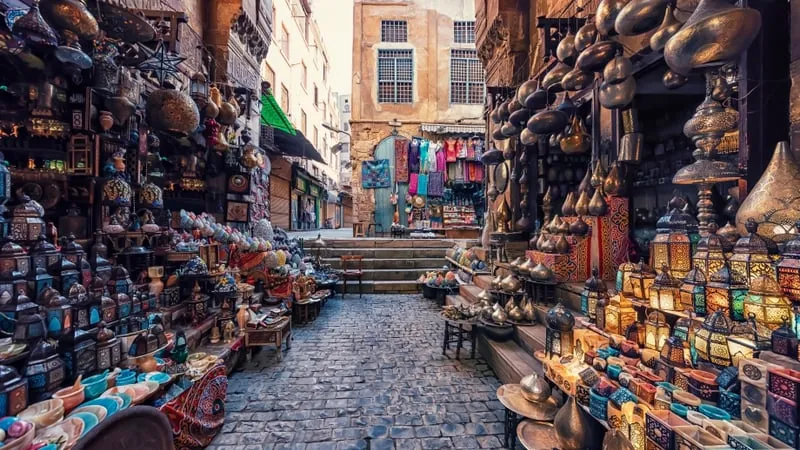
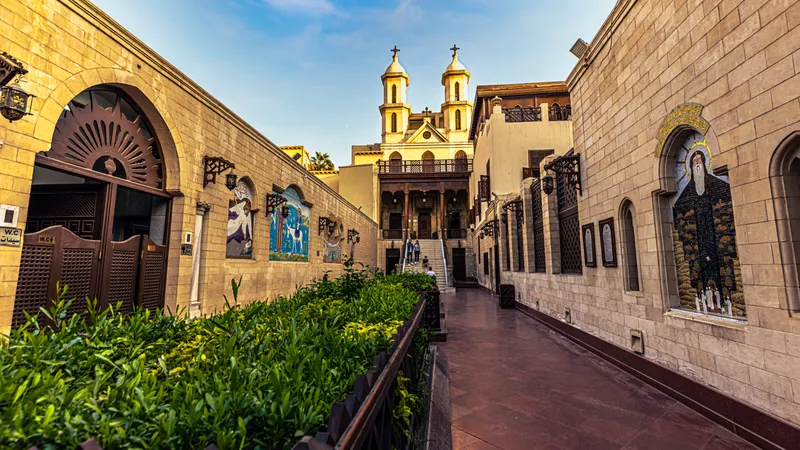
After discovering the Cairo of pyramids and minarets, we encounter yet another side of the city: its churches.
The most famous of these is the Hanging Church. There is no divine intervention involved: Al-Muallaqa, as it is known in Arabic, does not actually float in mid-air. The church rests above two ancient towers of the Roman fortress of Babylon.
Here, time seems to stand still in a remarkable oasis of silence and spirituality, hidden amid the clamour of Cairo’s sprawling metropolis.
But the Nile awaits. We have already caught glimpses of the river, whose delta opens out just beyond the Egyptian capital. Now it is time to sail upstream, from Luxor to Aswan.
Luxor: Welcome to the Land of the Gods
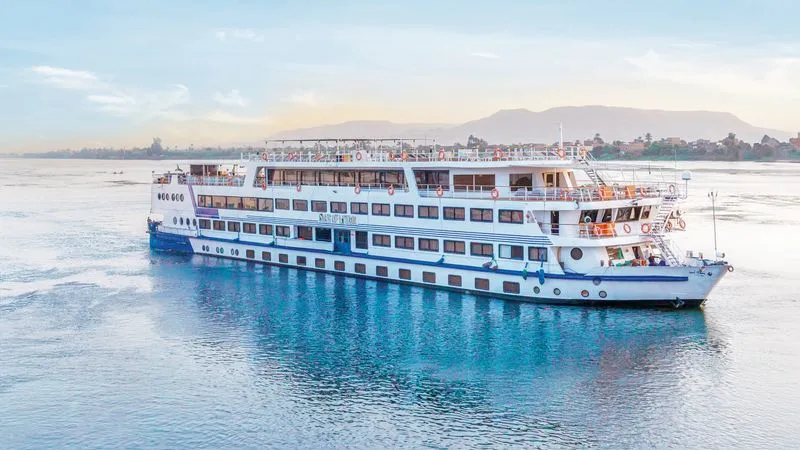
To reach our ship and settle into our cabins, we have to cross three or four other vessels. It is a familiar practice here. As early as the fifth century BC, the Greek historian Herodotus famously declared that ‘Egypt is the gift of the Nile’. Today, the river of kings continues to sustain a thriving tourism industry. With nearly 19 million visitors in 2025, tourism plays a major role in the country’s economy.
Luxor! What is not to love? More than 700 kilometres from Cairo, this was once home to one of Egypt’s most prestigious capitals. There is so much to discover on both banks of the Nile that we will make the most of our visits, both on the outward journey to Aswan and on our return.
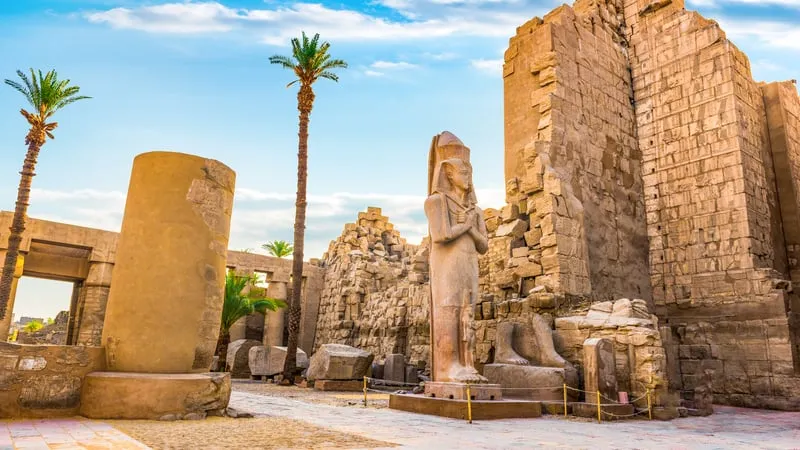
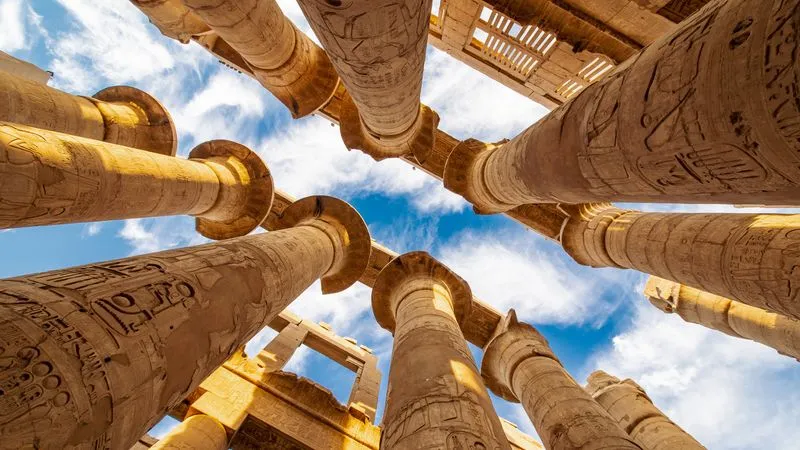
This afternoon, we head to Karnak, undoubtedly one of the most magnificent sites of ancient Egypt. Here, we are not simply entering a temple, but an immense religious complex. Its foundations were laid nearly 4,000 years ago, and generations of pharaohs contributed to this remarkable architectural achievement.
On our return, we will discover its neighbour, Luxor Temple, connected to Karnak by the seemingly endless Avenue of Sphinxes, stretching some 2.7 kilometres.
At Karnak, the Temple of Amun is, of course, an absolute must-see. Inside, the Great Hypostyle Hall, with its 134 columns arranged in sixteen carefully ordered rows, resembles a giant set of skittles. The twelve central columns, standing around 21 metres tall, are crowned with papyrus-shaped capitals. From ground level, it is difficult to appreciate their true size. There are around twenty of us in the group. At our guide’s suggestion, we join hands to form a circle matching the diameter of one of these capitals. Truly impressive! Rather than making us feel small, the sheer grandeur of this place fills us with wonder.
From Edfu, beneath the sun of Horus to Kom Ombo after dark
Our ship gets underway, occasionally weaving between the feluccas. From time to time, small boats draw alongside us. A bundle of goods lands on deck, and enterprising floating vendors hope that a few banknotes will make the journey in the opposite direction.
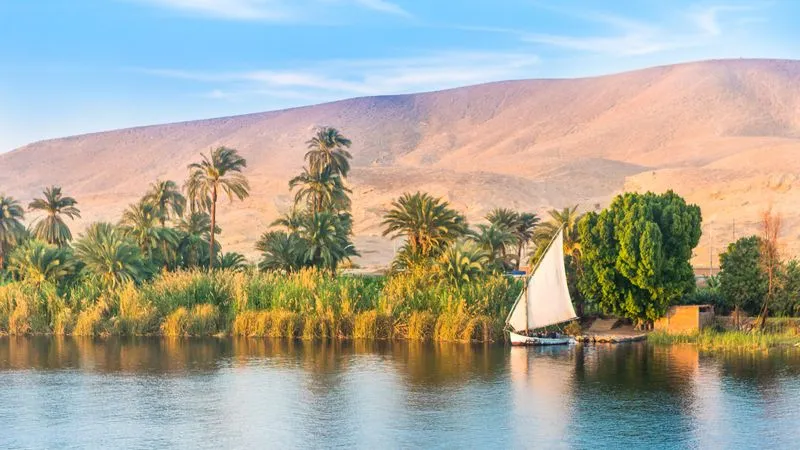
Throughout the cruise, the scenery is magnificent. As the sun sets, the nearby riverbanks glow red. The sun slips behind the hills, disappearing into the night. We could almost be on the set of a spaghetti western.
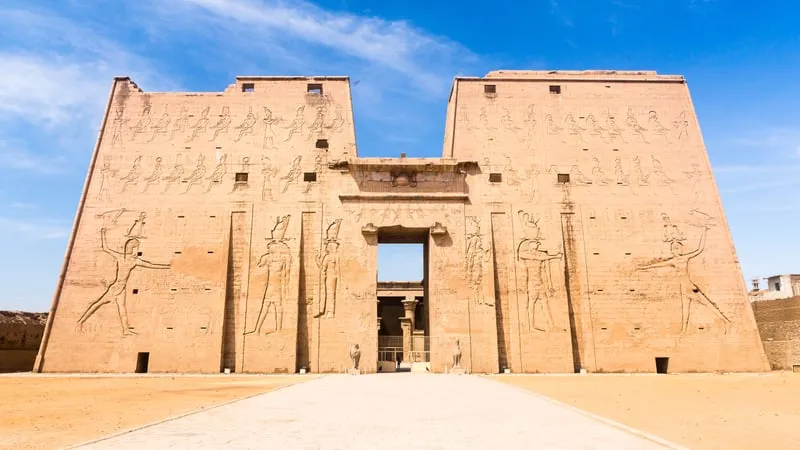
Before long, we reach the temples of Edfu, some 110 kilometres south of Luxor, and Kom Ombo, around sixty kilometres further upstream. Two visits, two very different experiences.
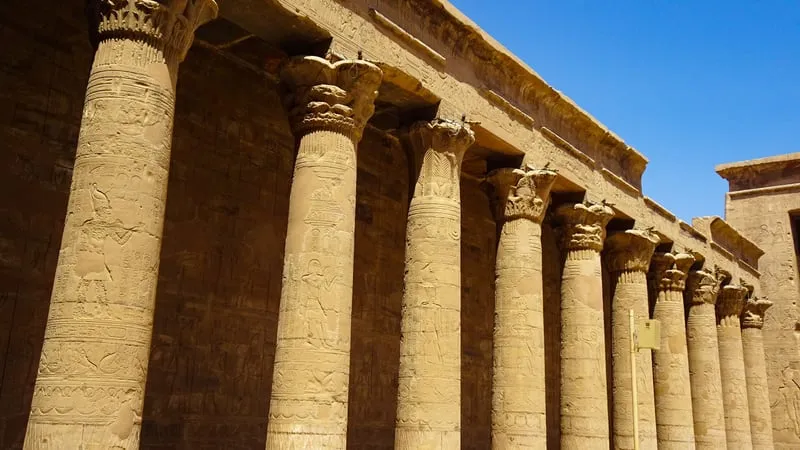
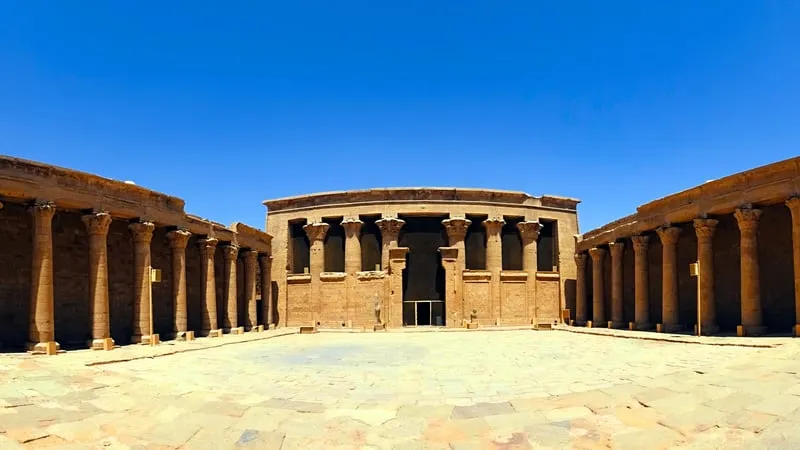
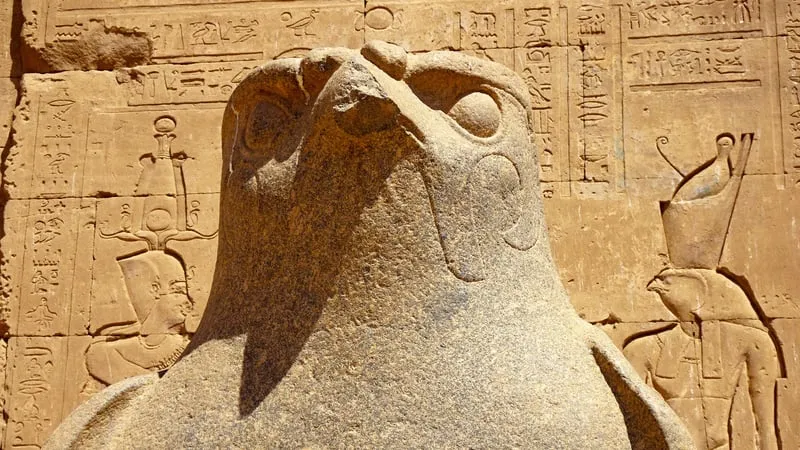
Beneath the scorching sun, remarkably well-preserved walls and chambers come into view. Edfu is entirely dedicated to Horus, the falcon-headed god. It is one of ancient Egypt’s most recent temples, and among the last to have been built. Construction began in 237 BC, during the Ptolemaic period, when the land of the pharaohs had acquired a distinctly Greek character.
Here, the new rulers embraced the architectural traditions of pharaonic temples, offering us a remarkably faithful glimpse of what an Egyptian sanctuary looked like in its heyday.
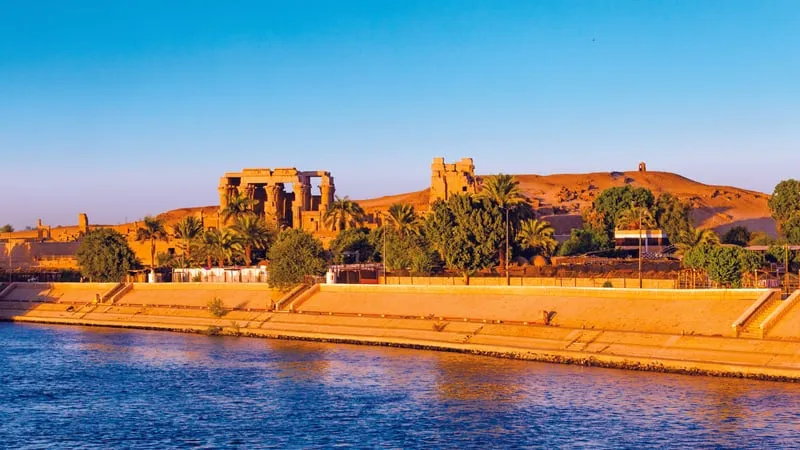
Further upstream, Kom Ombo can be seen from afar. Perched on the riverbank, the temple overlooks the many cruise ships moored along the quay. We wait a little before beginning our visit.
Night falls… The ancient stones are illuminated by floodlights. Bathed in warm orange hues, they seem to emerge from the darkness. The temple is shared by two deities: Horus, once again, associated here with healing, whose secrets are revealed in some of the temple’s carvings, and Sobek, the crocodile god associated with fertility.
In places, the temple appears to be divided in two. Much like ourselves, torn between two very different emotions.
Aswan and its legends, Philae and its serenity
Some 200 kilometres from Luxor, the outward leg of our cruise comes to an end in Aswan, at the first cataract of the Nile. Although the construction of the original dam, completed in 1902, and later the High Dam, inaugurated in 1971, tamed the ancient rapids, the first of the Nile’s six great cataracts remains impassable for our ship.
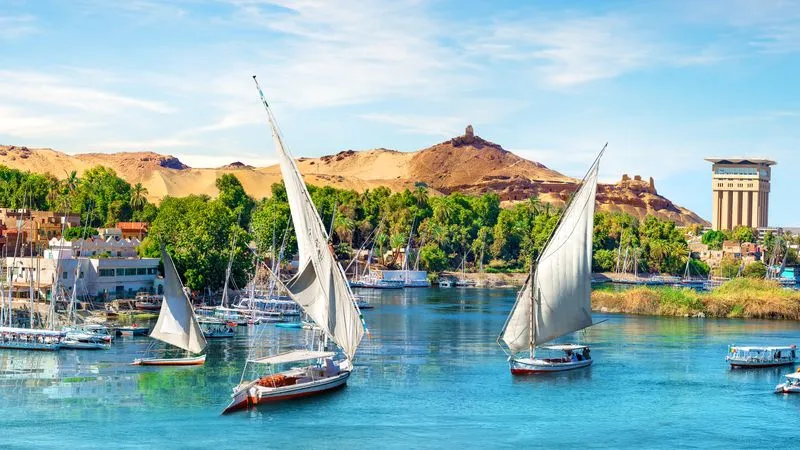
And so we stop in Aswan. Hardly a hardship! Here, the scenery is picture-perfect. The sand creates extraordinary patterns across the hillsides, feluccas lazily unfurl their sails, and a gentle sense of tranquillity envelops the islands scattered across the river.
Aga Khan III chose this setting for his final resting place, a mausoleum where he lies alongside his fourth wife, the Begum, a former Miss France born in Sète.
On the opposite bank, the British built a legendary hotel: the Old Cataract, now known as the Sofitel Legend Old Cataract. Over the years, countless distinguished guests have passed through its doors. Agatha Christie wrote several chapters of Death on the Nile here. Just days before his final Christmas, François Mitterrand spent time here preparing for his own journey into eternity.
Early the following morning, another adventure awaits. We are heading to Philae. To get there, we cross the Aswan High Dam, which profoundly transformed the Nile and reshaped the country’s economy.
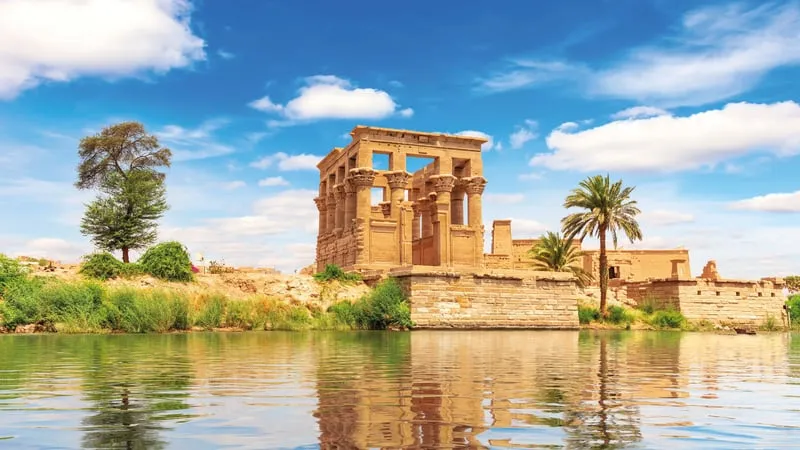
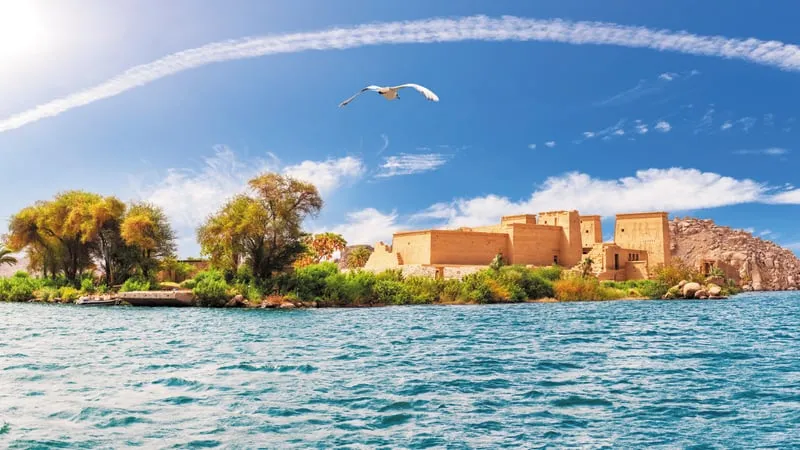
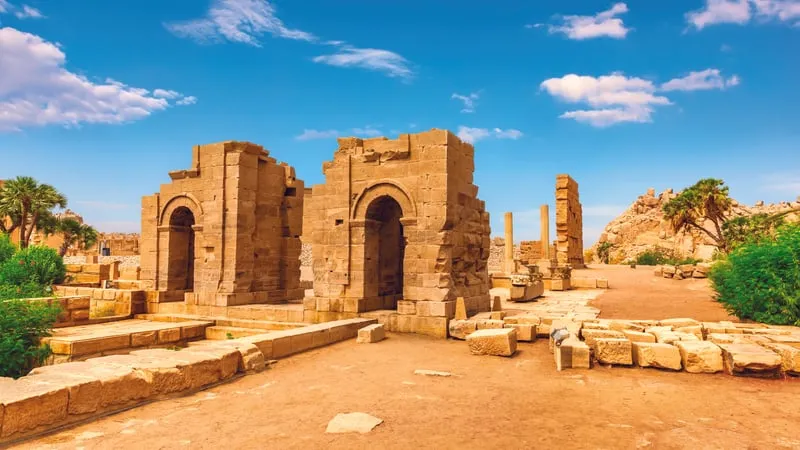
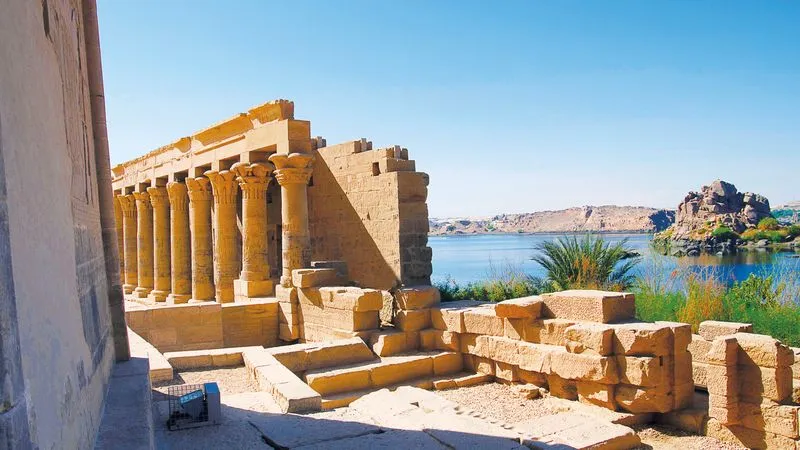
Following its construction, the temple complex of Philae had to be relocated nearly 500 metres to save this extraordinary site from being lost beneath the waters forever. Today, the temple stands on Agilkia Island, which visitors reach by small boat. Experts will emphasise the importance of this site, dedicated to Isis, the goddess of motherhood, magic and protection, and the universal mother of Egyptian mythology. They will admire the quality of the hieroglyphs carved into its walls. But for the uninitiated, the real magic lies elsewhere.
The moment you set foot on Philae, the noise of the world fades away. Wandering around the island is about more than exploring ancient ruins. It is an experience enveloped in a profound sense of serenity, unlike anything you will find elsewhere.
Abu Simbel: To the Glory of Ramesses II
Our alarm went off early this morning. Ra was still asleep when we were already boarding our coach, bound for Abu Simbel, nearly 300 kilometres away.
The long, immaculate ribbon of tarmac leading to the site gives us a chance to doze. Sudan is close by, barely eighty kilometres away. We have reached ancient Nubia, another side of Egypt.
What tranquillity there is in the middle of the desert, at least when the crowds are few!
It is time to explore. We make our way around the hill that houses the two temples until their façades come into view. And what a surprise: these temples are not dedicated exclusively to the gods.
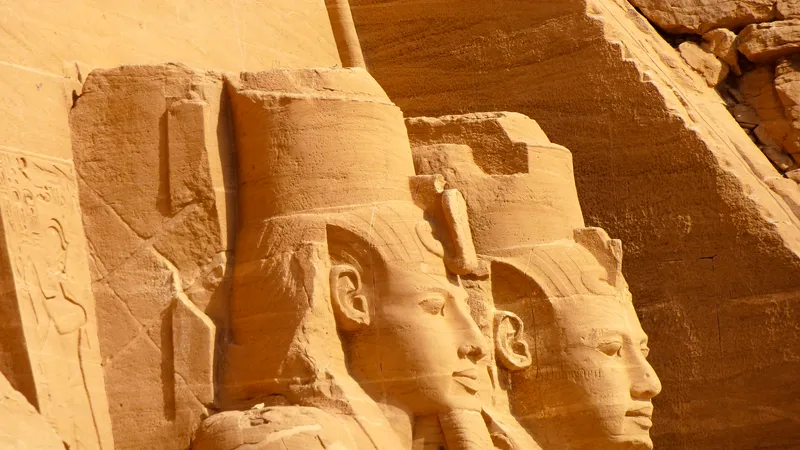
To the left stands the temple of Queen Nefertari, the favourite wife of Ramesses II. To the right, we find ourselves face to face with four towering figures, each twenty metres high. Four colossal statues guard the entrance to the Great Temple.
Taking the saying ‘if you want something done properly, do it yourself’ to another level, Ramesses II dedicated the temple to his own divine image, alongside the gods Amun-Ra, Ra-Horakhty and Ptah.
Inside, where guides are not permitted to give commentary, the same spirit prevails. Relief carvings recount the Battle of Kadesh in 1274 BC, depicting the pharaoh firing countless arrows and trampling his Hittite enemies.
A remarkable piece of propaganda, perhaps one of the earliest examples in history. In reality, neither side emerged victorious from a battle in which a rather reckless Ramesses came dangerously close to defeat.
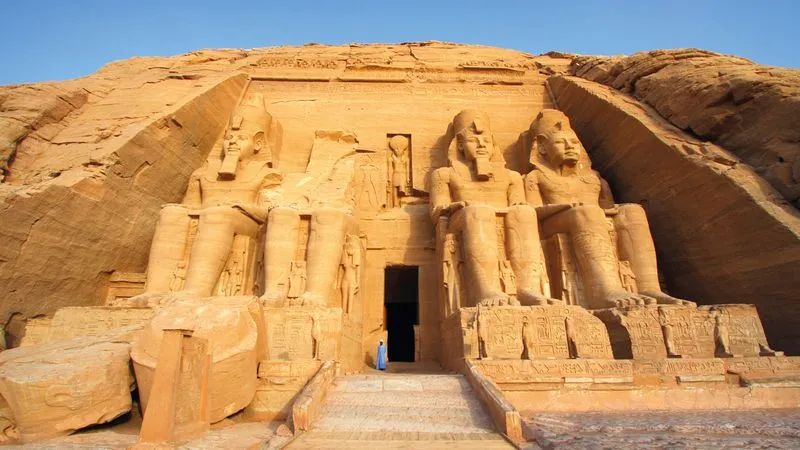
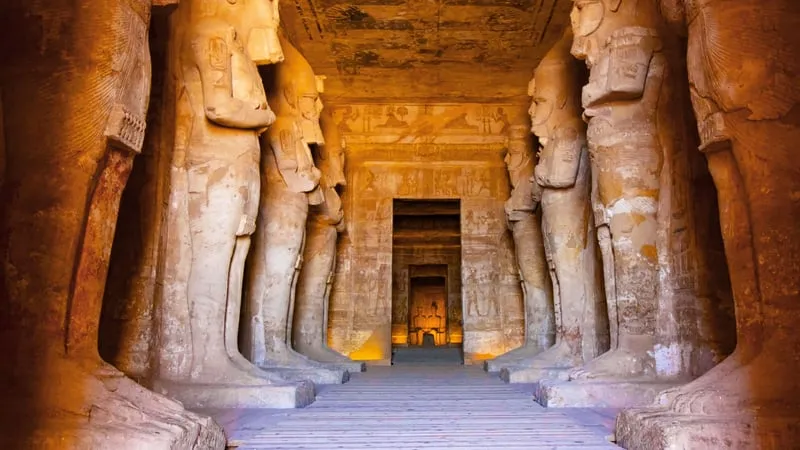
Like the pharaoh himself, Abu Simbel is a survivor. Just like Philae, and Moses, the site was saved from the waters.
Threatened by the rising waters of Lake Nasser in the 1960s following the construction of the Aswan High Dam, the two temples were relocated, stone by stone. They were cut into more than a thousand blocks, some weighing up to thirty tonnes, before being painstakingly reassembled like an enormous set of Lego, 200 metres from their original location and sixty metres higher.
Although dozens of surrounding villages were submerged, Abu Simbel and twenty-one other sites were saved thanks to a UNESCO campaign that raised nearly 80 million dollars.
And here, France has particular reason to be proud. One of the driving forces behind this remarkable achievement was Christiane Desroches-Noblecourt, the grande dame of French Egyptology. Her role in negotiations with the Egyptian authorities and in mobilising international support was instrumental.
Surely, she deserved a temple of her own, or at least a small chapel, alongside those of Ramesses II and Nefertari.
Back to Luxor in the Footsteps of Hatshepsut
All that remains is to turn around and sail downstream, returning to where it all began: Luxor. Two full days of sightseeing and a particularly rich programme await.
We begin in the Theban Necropolis, venturing off the beaten track to Medinet Habu and the temple of another Ramesses.
Ramesses III may be less famous than his predecessor, but judging by the scenes carved into the walls, he was every bit as formidable a warrior.
His relative obscurity allows us to explore this exceptionally well-preserved site away from the tourist crowds.
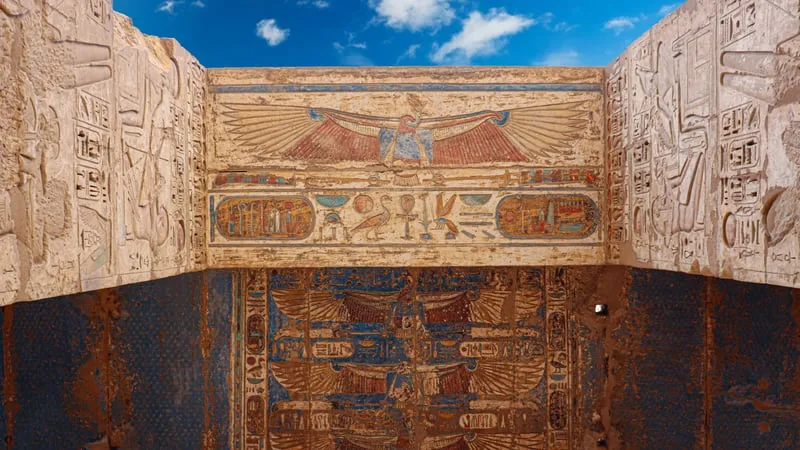
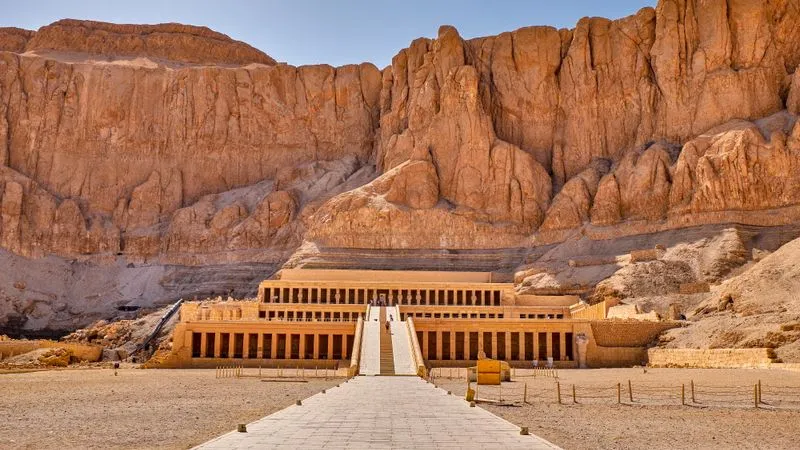
A little further on lies Deir el-Bahari. Even from the car park, the site reveals its extraordinary character. The Temple of Hatshepsut nestles against the towering limestone cliffs.
While the pyramids seemed determined to reach the heavens, this monument, carved into the mountainside and known in antiquity as the ‘Holy of Holies’, took a very different, more horizontal approach. It unfolds across three successive terraces leading to the sanctuary.
Hatshepsut, an exceptional woman, knew exactly what she wanted, here as elsewhere. Having become regent following the death of Thutmose II, her half-brother and husband, she gradually sidelined her rather young stepson to claim the throne herself.
Ah, family affairs… In ancient Egypt, royal family trees must have looked more like tangled bushes.
This strong-minded woman, who became pharaoh in her own right, expressed her determination through this temple, personally choosing both its location and its architect, Senenmut.
Her instructions to him were to create something unique. Something just like herself.
In the Valley of the Kings: A Farewell Filled with Hope
The final day of our journey dawns, and we take to the skies. Before sunrise, the roar of the burners breaks the silence, filling the darkness with warmth and colour. Gradually, the balloons inflate and the baskets are brought upright. Time to climb aboard, rise above the landscape and let the breath of ancient Egypt carry us over its wonders.
We drift above the Ramesseum and the Colossi of Memnon. The horizon is dotted with balloons resembling champagne corks. As daylight gradually washes over the landscape, the wind determines our course. Below us lie villages, the Nile and its narrow ribbon of greenery emerging from the surrounding desert.
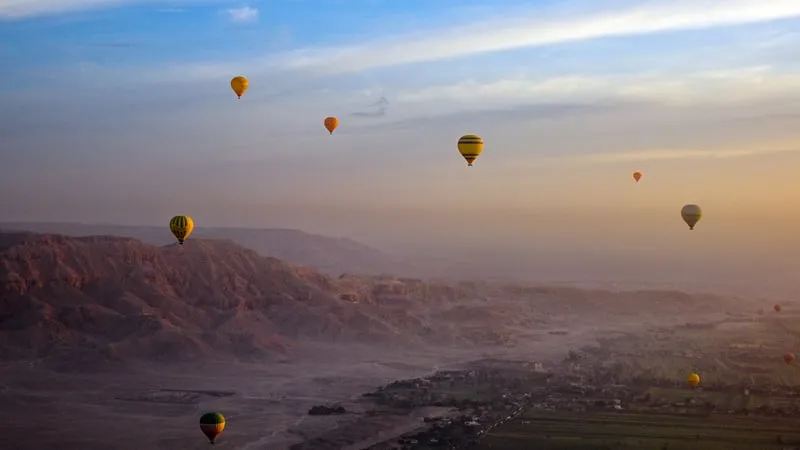
In the fields, farmers harvesting sugar cane look up at us. The long stalks are cut by hand, their leaves left in large piles on the ground. The harvest will supply the sugar mills of Upper Egypt. As we draw closer, they come running. Two children perched on a donkey smile up at us. Egypt is a beautiful country.
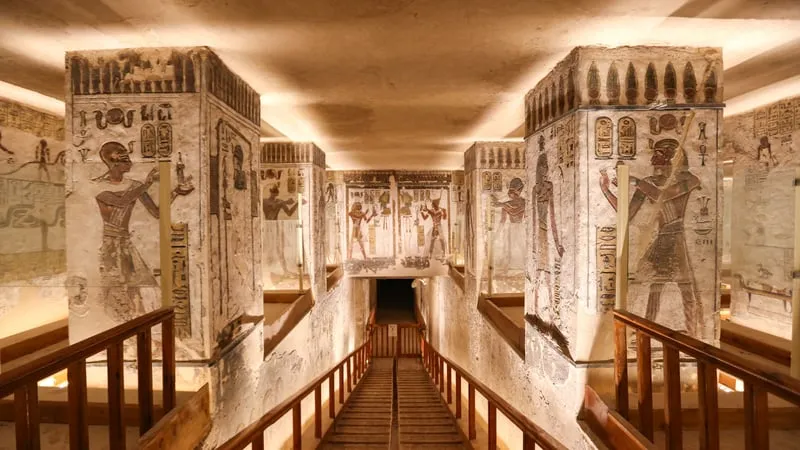
Our final visit brings us back down to earth, and even beneath it. We head to the Valley of the Kings, a vast expanse of rocky terrain where, at first glance, nothing particularly catches the eye. Yet hidden beneath its surface lie extraordinary wonders.
For nearly six years, Howard Carter laboured here in vain, methodically excavating the valley in search of Tutankhamun’s tomb. Growing weary of the fruitless endeavour, his patron, Lord Carnarvon, considered withdrawing his financial support altogether.
But Carter managed to secure one final excavation season, beginning in November 1922. His last chance — and what a stroke of luck!
On the third day, the first step of a staircase buried beneath the rubble was uncovered. According to legend, the discovery was made by a young boy responsible for bringing water to the workers, who happened to stumble over a stone. Who knows?
Sixteen steps further down, a sealed doorway was waiting to reveal the secrets of Tutankhamun.
More than sixty tombs have been discovered in the Valley of the Kings. Many fell victim to the greed of tomb robbers, who reached them long before the archaeologists.
Today, the tombs are opened to visitors on a rotating basis. They must be protected from the moisture brought in by visitors, something from which the desert has sheltered them for centuries.
The tomb of Seti I, father of Ramesses II, is one of the longest and most richly decorated. It extends through a labyrinth of corridors and stairways. Its walls are adorned with colours that have survived the passage of centuries. Some are nearly 3,200 years old. Yet they have barely aged a day. Eternal Egypt bids us farewell with a message of hope.
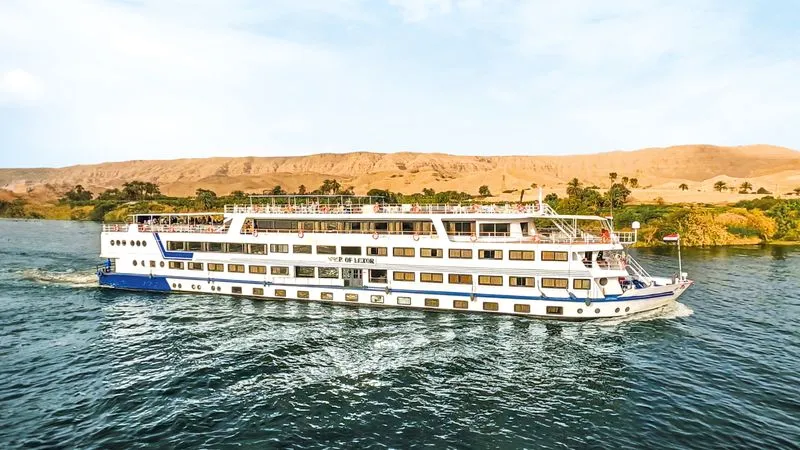
Discover our Nile river cruises in Egypt

About the Author
Journalist Philippe Marcacci knows CroisiEurope’s ships and destinations particularly well, having travelled on numerous cruises.
He is also one of the two authors of La passion des croisières (A Passion for Cruises), the commemorative book celebrating CroisiEurope’s 50th anniversary.